INSPIRED BY
OTHER WRITING

Pyaasa
An old one, once more. I wrote this to get into the film society of our university. I was in the script writing department, which I then ended up heading. Once a year, we did a 7 day film challenge, where we tried to write and shoot a short film in 7 days, in groups of about 5 to 8. I wrote and edited the film in the first year. And in the next year, thanks to the head Hardik, I headed these small contest teams as well. I am not going to comment on the quality of those films. Less you know the better. These were some of the best days of college. I used to write the scripts with a partner usually, and it really taught me what a gift that is.
To writing! Good, bad and in-between.
Yeh duniya agar mil bhi jaye to kya hai?
Translation: Even if I gain this world, of what use is it?
Pyaasa(1957) is a movie directed and produced by Guru Dutt. It was a critical and commercial success. The movie is about an aspiring poet, Vijay. The title is a reference to his desire for fame and success. He lives on the streets, because his family wishes for him to earn a stable living. He tries to get his poems published but is dismissed as a nobody even by small newspapers. His brothers sell his poems to the raddiwala for 10 paise.
His mother loves him and wants to live with him. He can barely support himself and so he declines, hoping for the right time to come. He meets a prostitute, played by a young and vivacious Waheeda Rehman, named Gulabo. She sings him one of his own poems and tries to lure him. When he refuses her offer, she turns cold and harsh. Soon she realizes that he is the writer of her favourite verses and slowly falls for him.

Vijay, on the other hand, is trying to come to terms with the fact that his first love, Meena, is married to his boss,Mr Ghosh who hires him specifically because he is jealous of him. The cat is let out of the bag eventually and Vijay is fired from his job. His mother dies soon after and he spirals into alcoholism and depression. He feels utterly lost and tries to commit suicide, but is saved by a poor man to whom he lent his only coat, who ultimately dies in front of a train.
The world declares Vijay dead instead. Gulabo goes to Meena to publish Vijay’s poems. His books cause uproar and he becomes a martyr beloved by the public. To keep earning profit off him, Mr Ghosh and Vijay’s friend refuse to recognise him when he recovers from the train accident. He escapes a mental institution with the help of his friend, a champiwala played by the immensely talented Johnny Walker. Vijay, after being rejected by his paid off brothers, goes to his own funeral. He sings his own poetry but is trampled by a confused mob. His friend and brothers agree to recognise him in order to make money off of his success. When he understands how corrupt the world is, Vijay declares that he isn’t the poet people love, goes to Gulabo and embraces her. They walk into a smog, away from the world and towards peace.
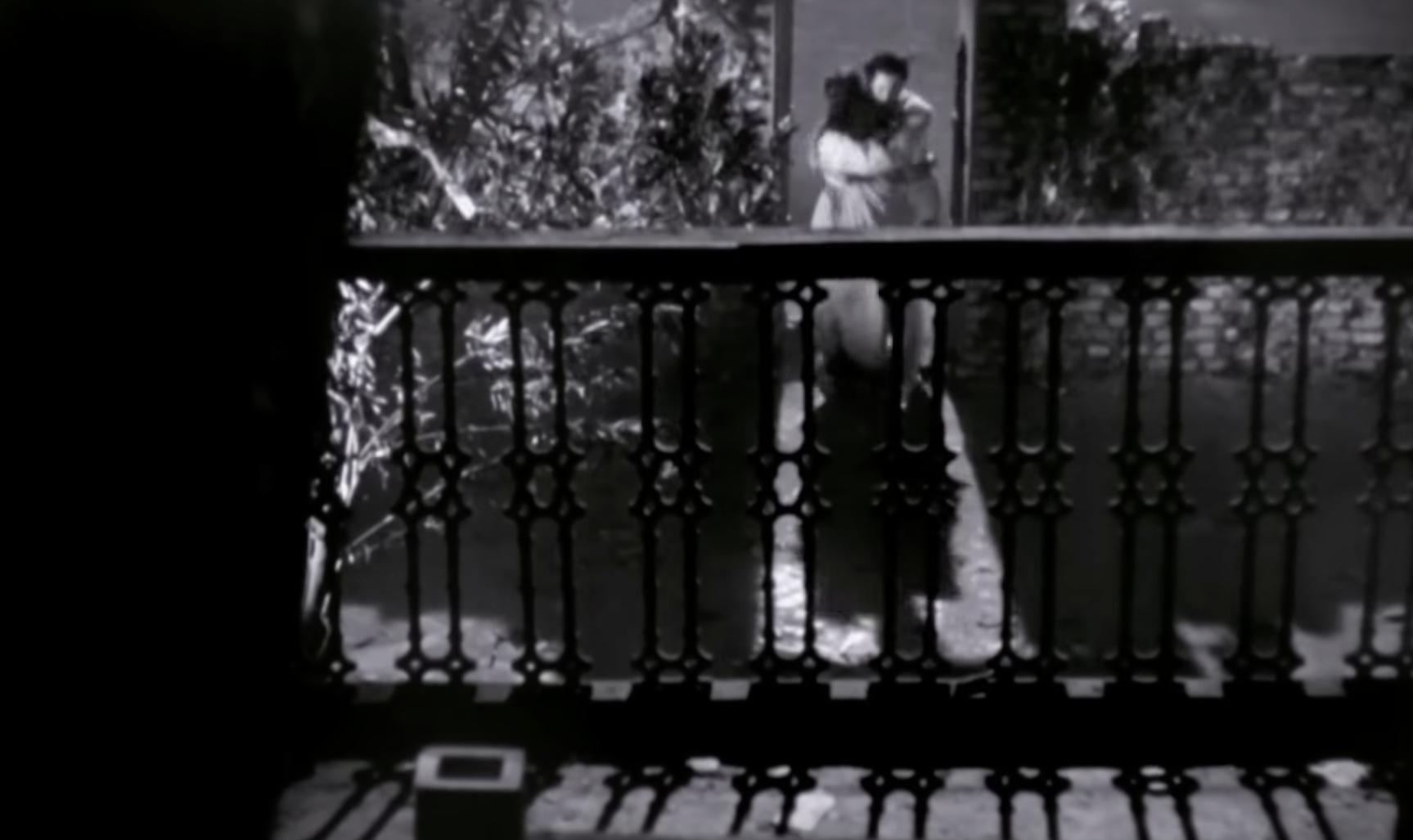
The movie is brilliant and holds up surprisingly well. This was Dutt’s prized personal project. He made it after a string of box office hits that allowed him the security to make something alternative. The shot composition is spectacular. The black and white colours are used to show us the troubled state of the characters. When Vijay wakes up in a hospital, his kurta is clean and white but his face is framed by shadows. There are some surreal moments when pieces of paper fly due to aggressive wind and cloud the screen, that happen only when a character’s world has been shaken. When Meena confronts Vijay about his lies, he is standing on a door, emanating heavenly light, signifying his self-actualization.

The filmmakers didn’t have monitors. A take was a take was a take. Some of the faces get cut unevenly sometimes, but overall that camera is used effectively. Sahir Ludhianvi, an acclaimed poet and lyricist, wrote the iconic songs. The film seems based a little on his life and his unrequited love for the poet Amrita Pritam, but the comparisons end there. The score is by S.D Burman and it is fantastic. The music is intricately weaved into the film’s atmosphere; rising, looping and shifting to convey Vijay’s hope, despair and grief. His poems(nazmein) are so hauntingly beautiful they will stick with you for a long time to come. He writes about the plight of the downtrodden and exploited women.

Amrita Pritam
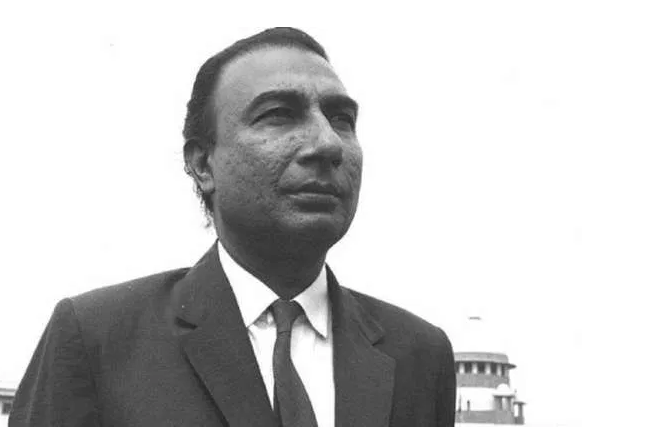
Sahir Ludhianvi
In a lot of these movies, the misunderstood artistic genius is cruel to those around him, simply because they stand in his way. Vijay, on the other hand, is quiet and controlled. He feels the suffering around him deeply and correctly blames the system that allowed it instead of individual people.
Mujhe kisi insaan se shikayat nahi. Mujhe us samaj se shikayat hai jo insan se uski insaaniyat cheen leta hai.
I have no issues with any single person. I have issues with the society that takes away the personhood from a person
The few poems about a lost love and feelings of being rejected from society cut right through. Ludhianvi’s own poems were inspiring to the post independence youth. His work dealt less with god and spirituality and more with the concerns of that time, unemployment, excessive materialism, ignorance and abuse directed towards the underprivileged, that have only exacerbated in the years since. The classic status of the movie is well deserved.
Writer Abrar Alvi apparently wanted Vijay to land on a compromise with civil society, but Guru Dutt insisted on the ending we got. It works. It certainly leaves a smile on my face. His 11th hour monologue says it best
Jahan jeene se maut sasti, Jahan Pyaar hota hai wyaapar bankar, Jahan admi kuch nahin, wafa kuch nahi, dosti kuch nahi. Yeh Duniya agar mil bhi jaye to kya hai?
Where dying is cheaper than living, where love is a business affair, where a person becomes nothing, loyalty is nothing, friendship means nothing.
Even if I gain this world, of what use is it?